Why Safety Comes Before Arousal: The Science Behind Our Approach
 Irene Andersson

How touch without an agenda can make a difference. By Irene Andersson - Pelvic Floor Awareness
Many women live slightly above their bodies — in the head, in doing, in adapting. The pelvic floor, the clitoris, the cervix, the female prostate: these places are rarely spoken of at all, and when they are, it's almost always in one narrow context. So women grow up with deep, intelligent parts of themselves that are either ignored or only ever discussed in terms of performance.
That's the gap we work in. Not by adding pressure to perform, but by removing it entirely.
Touch, without an agenda
We do begin with touch — breath, contact, conscious touch — from the very first session. What's different is what that touch is for. It isn't aimed at arousal, and it isn't building toward an outcome.
It surprises people to learn that this isn't a new idea — it's one of the oldest, best-tested ideas in this field. In the 1960s, researchers William Masters and Virginia Johnson developed something called Sensate Focus: structured touch with no goal of arousal at all, used specifically to help people who were struggling with performance pressure, pain, or disconnection from their own bodies. Decades later, reviews of this work still find meaningful improvements in desire and satisfaction — precisely because nothing is being asked of the body except to notice what it feels. (Several more recent reviews — including ones examining its use with cancer survivors, chronic pain, and trauma — also note that this kind of work needs real care and pacing, which is exactly why we hold it the way we do: slowly, and never alone.)
More recently, Dr. Lori Brotto and her colleagues at the University of British Columbia have spent over a decade studying mindfulness-based approaches with women experiencing low desire or difficulty feeling aroused. Their findings are consistent: when women are guided to simply notice bodily sensation, without judging it or chasing a particular outcome, desire and satisfaction tend to rise — and the gains hold up months later. The mechanism isn't more stimulation. It's more attention.
The body has to feel itself before it can open
This points to something researchers call interoception — our capacity to sense what's happening inside us. Wolf Mehling, who built the most widely used scientific tool for measuring this capacity, has spent years showing that interoceptive awareness isn't a side detail of health — it's central to it, shaping pain, emotional regulation, and recovery. A 2024 study went further, looking specifically at women's experience of pleasure: it found that women who were better at noticing their own internal sensations, and who trusted their bodies more, reported more satisfaction — regardless of whether they were alone or with a partner.
The same pattern shows up in pelvic floor research more broadly. Across several clinical studies on pelvic pain and dyspareunia, the consistent finding is that many pelvic floor difficulties aren't simply about strength. They're about tension, perception, coordination, and a nervous system that hasn't yet learned it's safe to soften. Treatment that works tends to combine breath, awareness, and gentle movement — not just exercise.
There's a useful word for this from the field of nervous system science: neuroception — the body's own background process of constantly scanning for whether now is safe. You can't think your way past it. You can only show it, again and again, gently, that it is.
What this looks like, right now
You don't need a workshop to begin. Try this: place a hand low on your belly. Take one slow breath. Don't try to feel anything in particular — just notice whatever is already there. Warmth, tension, stillness, nothing much. All of it is information. None of it needs fixing.
This is the same invitation we extend in Into the Depth of the Feminine — just held for longer, and in the company of other women doing the same thing.
As Eva, 43, put it after her weekend with us:
"The most important takeaway: there's nothing wrong with me. I can connect gently and lovingly to my feminine parts, and my body is the gateway to my soul."
"I feel something unlocked in me; I can be present and express myself more naturally. I connected to a life force that was always in me but now shows itself."
No performance. No outcome to chase. Just a body, given permission to be felt.
If this is resonating, our free webinar on 1 september is a gentle next step — an introduction to the work, with no pressure to go further than feels right. And in November, we'll gather in Budapest for the full weekend.
Key research
• Masters, W.H. & Johnson, V.E. — Human Sexual Inadequacy — Little, Brown — 1970
• Mehling m.fl. — Body Awareness: Construct and Self-Report Measures — PLoS ONE — 2009
• Brotto & Basson — Group Mindfulness-Based Therapy Significantly Improves Sexual Desire in Women — Behaviour Research and Therapy — 2014
Categories: : Non-sexual approach, Safety
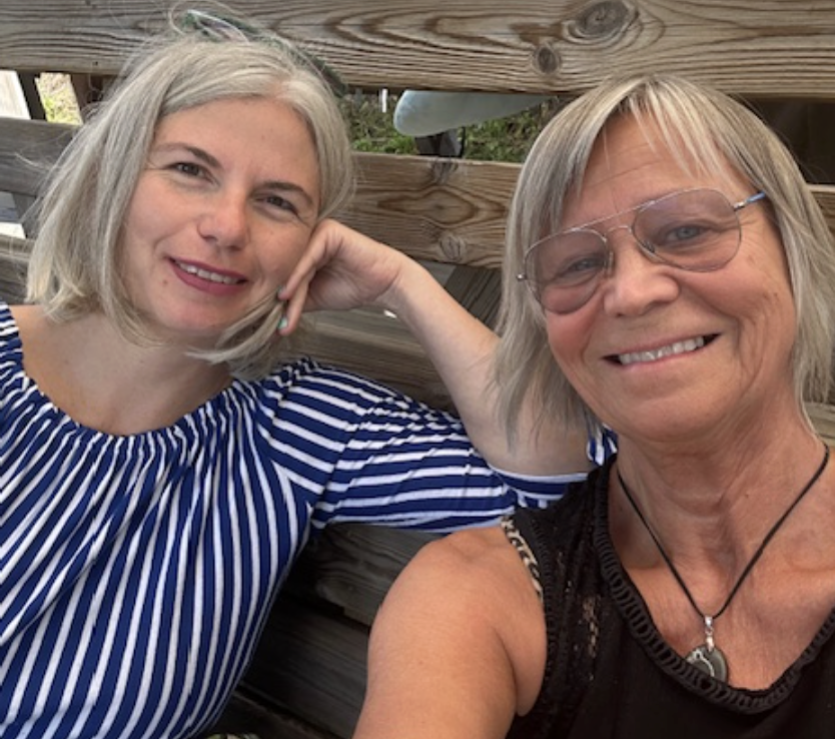
Irene Andersson – Sweden
Author and teacher of taoist sexual practice since 1998, Irene brings over 30 years of experience in body therapies and pelvic floor work. Her approach bridges Eastern wisdom and modern anatomy, guiding women back to their bodies with clarity, depth and respect.
Anita Bori – Hungary
Somatic sex therapist and fascia specialist trained in pelvic floor therapy and structural integration. Anita combines anatomical precision with deep empathy and presence, supporting women in reconnecting body, emotion and spirit through gentle, non-sexual somatic exploration.
Our Shared Mission
We are devoted to women’s embodiment and empowerment. We believe in the body’s intelligence. In safety before intensity. In awareness before performance. When pressure disappears, pleasure and vitality can unfold naturally.